












 配送


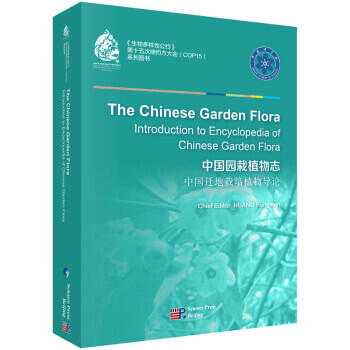
中國園栽植物志-中國遷地栽培植物導論 (英文版) 黃宏文 9787030686848 【台灣高等教育出版社】 的詳細資訊
印行年月:202101*若逾兩年請先於露露通洽詢存貨情況,謝謝。台灣(台北市)在地出版社,每筆交易均開具統一發票,祝您中獎最高1000萬元。書籍所在地若為中國大陸均為代購商品,完成訂單後正常情形下約兩周可抵台。書名:中國園栽植物志-中國遷地栽培植物導論 (英文版)ISBN:9787030686848出版社:科學著編譯者:黃宏文叢書名:《生物多樣性公約》第十五次締約方大會 (COP15) 系列圖書頁數:716所在地:中國大陸書號:1328624可大量預訂,請先連絡。內容簡介《中國遷地栽培植物導論(英文版)》收錄了我國植物園遷地栽培的植物15812種,隸屬於312科、3181屬。包括蕨類植物59科168屬835種,裸子植物12科53屬299種,被子植物241科2960屬14678種。每個科內按屬、種拉丁名字母順序排列,並附有代表種的彩色照片。精彩書評本書可為農林業、園林園藝等專業領域的科研和教學人員提供參考。目錄ContentsI Overview of Botanical Garden Based Research 11 Botanical gardens and significance of plant living collections on biological discovery 11.1 Linnaeus and taxonomy 11.2 Henslow and Darwin on speciation and evolution 21.3 Augustin Pyramus de Candolle on the concept of circadian rhythm or chronobiology 31.4 Hooker & son and Kew Gardens 31.5 Baas-Becking hypothesis and Leiden Botanical Garden 42 Typical research activities in the history of botanical gardens 52.1 Invention of plant specimens and herbaria 52.2 Binomial nomenclature and taxonomy research in botanical gardens 52.3 Flora compilation and botanical gardens 63 Center of plant introduction, re-domestication and dissemination of crop plants 73.1 Introduction, domestication and spread of food and other crop plants in Europe in the 16th–17th centuries 73.2 Introduction and spread of crop plants dominated by European colonialists since the 18th century 94 Plant ex situ conservation and biodiversity research 114.1 Macrobiological fields of plant science 124.2 Microbiological fields of plant science 134.3 Research directions of the botanical garden in the age of mega data 134.4 Responses to global climate change 13II World Garden Flora 191 Botanical gardens in the world 191.1 Africa 201.2 Asia 201.3 Europe 201.4 North America 211.5 South America 211.6 Oceania 212「本資訊為台灣高等教育出版 社露天賣 場所有,請前往本社賣場訂購,商用複製必究。」 Living collections and extent of plant diversity of the world garden flora 222.1 Inventory of world garden flora in Gymnosperms 232.2 Inventory of world garden flora in Angiosperms 242.3 Inventory of world garden flora in Pteridophytes 342.4 Inventory of world garden flora in Bryophytes 352.5 Specially assembled living collections 41III Ex situ Flora of China 461 Formulation of Ex situ Flora of China 462 Ex situ Flora of China compared with Flora of China 492.1 Alien plants 492.2 Economic and useful plant species 502.3 Taxa entry and boundary 512.4 Passport data 522.5 Phenological data 522.6 Taxonomic system 533 Progress and outputs 533.1 Checklist of ex situ cultivated plants in China 533.2 Encyclopedia of Chinese garden flora 543.3 Ex situ Flora of China 554 Editorial aspects in future 55IV Introduction to Families of Angiospermae 571.Acanthaceae 爵床科 572.Aceraceae 槭樹科 633.Actinidiaceae 獼猴桃科 664.Agavaceae 龍舌蘭科 685.Aizoaceae番杏科 716.Alangiaceae八角楓科 757.Alismataceae澤瀉科 768.Amaranthaceae 莧科 779.Amaryllidaceae石蒜科 7910.Anacardiaceae漆樹科 8111.Ancistrocladaceae 鉤枝藤科 8312.Annonaceae 番荔枝科 8413.Apocynaceae 夾竹桃科 8714.Aponogetonaceae水蕹科 9115.Aquifoliaceae 冬青科 9216.Araceae 天南星科 9517.Araliaceae 五加科 10218.Arecaceae 棕櫚科 10619.Aristolochiaceae馬兜鈴科 11920.Asclepiadaceae蘿藦科 12121.Balanophoraceae 蛇菰科 13022.Balsaminaceae 鳳仙花科 13123.Basellaceae 落葵科 13224.Begoniaceae秋海棠科 13325.Berberidaceae 小檗科 13826.Betulaceae 樺木科 14227.Bignoniaceae 紫葳科 14428.Bixaceae 紅木科 14729.Bombacaceae 木棉科 14830.Boraginaceae紫草科 14931.Bretschneideraceae伯樂樹科 15132.Bromeliaceae 鳳梨科 15233.Buddlejaceae 醉魚草科 15834.Burmanniaceae 水玉簪科 15935.Burseraceae 橄欖科 16036.Butomaceae花藺科 16137.Buxaceae 黃楊科 16238.Cabombaceae ?菜科 16339.Cactaceae 仙人掌科 16440.Callitrichaceae 水馬齒科 17441.Calycanthaceae蠟梅科 17542.Campanulaceae 桔梗科 17643.Cannaceae美人蕉科 17844.Capparaceae 山柑科 17945.Caprifoliaceae忍冬科 18046.Cardiopteridaceae 心翼果科 18447.Caricaceae番木瓜科 18548.Caryophyllaceae石竹科 18649.Casuarinaceae 木麻黃科 18850.Celastraceae衛矛科 18951.Ceratophyllaceae金魚藻科 19252.Cercidiphyllaceae 連香樹科 19253.Chenopodiaceae藜科 19354.Chloranthaceae金粟蘭科 19655.Cistaceae 半日花科 19756.Clethraceae 榿葉樹科 19757.Cochlospermaceae彎子木科 19858.Combretaceae使君子科 19959.Commelinaceae 鴨跖草科 20060.Compositae菊科 20261.Connaraceae 牛栓藤科 21862.Convolvulaceae旋花科 21963.Coriariaceae 馬桑科 22264.Cornaceae山茱萸科 22265.Costaceae 閉鞘姜科 22466.Crassulaceae 景天科 22667.Cruciferae十字花科 23168.Crypteroniaceae 隱翼科 23469.Cucurbitaceae 葫蘆科 23570.Cunoniaceae 南薔薇科 23871.Cyclanthaceae 巴拿馬草科 23872.Cyperaceae莎草科 23973.Daphniphyllaceae虎皮楠科 24574.Datiscaceae 野麻科 24675.Davidiaceae 珙桐科 24676.Diapensiaceae 岩梅科 24777.Dichapetalaceae 毒鼠子科 24878.Didiereaceae 龍樹科 24879.Dilleniaceae五椏果科 24980.Dioscoreaceae 薯蕷科 25081.Dipentodontaceae十齒花科 25282.Dipsacaceae 川續斷科 25383.Dipterocarpaceae龍腦香科 25484.Droseraceae 茅膏菜科 25585.Ebenaceae柿科 25686.Elaeagnaceae 胡頹子科 25887.Elaeocarpaceae杜英科 25988.Elatinaceae 溝繁縷科 26189.Ericaceae 杜鵑花科 26190.Eriocaulaceae 谷精草科 26791.Erythroxylaceae 古柯科 26892.Eucommiaceae杜仲科 26893.Euphorbiaceae大戟科 269精彩書摘Ⅰ Overview of Botanical Garden Based ResearchOver the past 500 years, as a specialized research institution of botany, the botanical gardens have always played a key role in botanical research, conservation, and application of plant resources. They have a profound scientific connotation, engaging comprehensively in the basic biological research on plant, as well as collection, evaluation, exploration and sustainable utilization of plant resources. They assemble and maintain living collections and discover sustainable uses of plants for human society. Despite various purposes the botanical gardens are set up for, these research activities are the soul of botanical gardens and the backbone of botanical garden development.The earliest botanical gardens were established in the middle of the 16th century, such as Padua Botanical Garden in Italy in 1545, devoted to the study of plants. Botanical gardens in the 16th–17th centuries focused on studies of medicinal plants and the development of new drugs. However, since the 18th–20th centuries, research activities in botanical gardens rapidly expanded into plant taxonomy and gradually towards various branches of botany, such as plant morphology, organs and anatomy, phenology, plant chemistry, genetics and even today』s plant molecular biology, genomics and metabolomics, etc. The advanced trajectory of scientific research of the world botanical gardens over the past 500 years is not only a microcosm of the whole era of biological sciences, but also an unremitting pursuit of mankind exploration and utilization of plant resources to benefit the development of economy and human community (Huang et al., 2015; Huang, 2018a).1 Botanical gardens and significance of plant living collections on biological discoveryThe research and discovery based on plant living collections have played a prominent role in the evolution of botanical sciences. Botanical research is the core and soul of botanical gardens. Historical literature records that the botanical gardens and their living collections were the inspiration and research resources of many great scientists, such as Carl Linnaeus (1707–1778), Charles Darwin (1809–1882) and others.Botanical gardens, as the most important research and teaching platform of plant biology during the 18th–19th centuries, made indelible contributions to scientific discoveries and the establishment of theoretical systems. During this period, the botanical gardens provided a good research environment and convenient observation of living plants, and thus promoted botany and biology. The following stories of botanical gardens and renowned scientists are worth mentioning (Huang et al., 2015; Huang, 2018a).1.1 Linnaeus and taxonomyAfter many years of his European study tours, Carl Linnaeus returned to his hometown, Sweden, in 1738 and joined Uppsala University, his alma mater. Soon in 1741, he became a professor of botany at the university and also director of the Uppsala Botanical Garden until he died in 1778. Over more than 30 years of his professional career, he focused on research and teaching in the Uppsala Botanical Garden. In nearly 40 years after he published Systema Naturae in 1735, Linnaeus devoted his whole life to establishing classification systems of animals, plants and even minerals. Especially after 1741, when he was in charge of the reconstruction of the Uppsala Botanical Garden, he adopted his classification system in the garden design and living plants allocation, and made tremendous efforts to prove the feasibility of his theory (Blunt, 2002). Although Linnaeus system was replaced by other natural systems in the late 19th century due to its obvious subjectivity, and no longer used in plants configuration design of botanical gardens (Jarvis, 2007), his Philosophia Botanica published in 1751 elaborated key points of management and plant cultivation of botanical gardens (Freer, 2003). In addition, Linnaeus』 teaching of botany was usually carried out in botanical gardens. Students were encouraged to trust the practice instead of academic authority. Obviously, botanical gardens made a valuable contribution to the foundation and development of plant taxonomy in the 18th–19th centuries (Huang, 2018a).1.2 Henslow and Darwin on speciation and evolutionDarwin』s The Origin of Species published in 1859 is considered to be a landmark in the history of biological science. In the 20 years before the publication, Darwin was influenced and enlightened by several masters in biology. The most important one is the founder, designer and leader of Cambridge Botanical Garden, Prof. John Stevens Henslow (1796–1861) of Cambridge University. He was the supervisor and mentor of Darwin. Henslow designed the Cambridge Botanical Garden for the purposes of both scientific verifications of experiments and botanical teaching of biological theory hypothesis. As early as 1829, Henslow developed a mature idea of sp詳細資料或其他書籍請至台灣高等教育出版社查詢,查後請於露天露露通告知ISBN或書號,我們即於露天上架。商品備註・物品狀況:全新・最新關注時間:2025-06-10



![中國園栽植物誌──中國遷地栽培植物導論(英文版)]| 一本My Book One](https://nrapp-prd.oss-cn-hongkong.aliyuncs.com/perm/product/20230928/MTY5NTgwMzk3NzE1MV9VbnRpdGxlZC5qcGc.jpg?x-oss-process=image/resize,w_500 "中國園栽植物誌──中國遷地栽培植物導論(英文版)]| 一本My Book One")
![中國園栽植物誌──中國遷地栽培植物導論(英文版)]| 一本My Book One](https://nrapp-prd.oss-cn-hongkong.aliyuncs.com/perm/product/20230928/MTY5NTgwNDQ4NjgwOV9VbnRpdGxlZC5qcGc.jpg?x-oss-process=image/resize,w_546/quality,Q_80 "中國園栽植物誌──中國遷地栽培植物導論(英文版)]| 一本My Book One")

![中國園栽植物誌──中國遷地栽培植物導論(英文版)]| 一本My Book One](https://nrapp-prd.oss-cn-hongkong.aliyuncs.com/prod/9786267680490_1.jpg?x-oss-process=image/resize,w_393/quality,Q_80 "中國園栽植物誌──中國遷地栽培植物導論(英文版)]| 一本My Book One")
![中國園栽植物誌──中國遷地栽培植物導論(英文版)]| 一本My Book One](https://nrapp-prd.oss-cn-hongkong.aliyuncs.com/perm/product/20251109/MTc2MjU3MDU2MDk3Ml_kuIrlnJYuanBn.jpg?x-oss-process=image/resize,w_393/quality,Q_80 "中國園栽植物誌──中國遷地栽培植物導論(英文版)]| 一本My Book One")



暢銷商品排行榜




查看此商品的人也看了以下商品
-
 我的商店庫存: 189含稅1977元
-
 我的商店庫存: 431含稅7414元
-
 我的商店庫存: 102含稅13720元
-
 我的商店庫存: 224含稅44926元
-
 我的商店庫存: 387含稅37226元
附近賣場的商品





顧客評論
推薦度 4.4分
目前有 171則評論。